

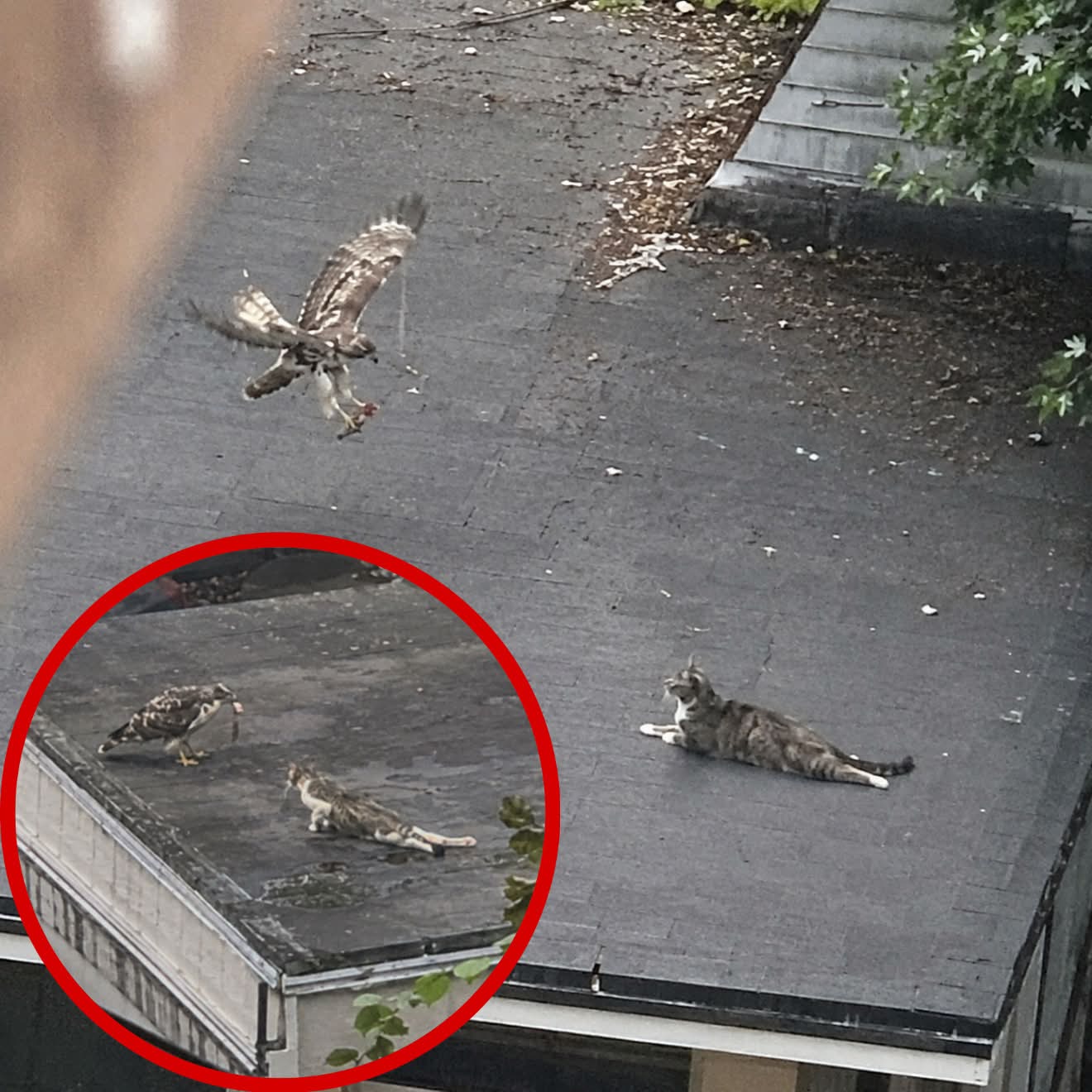
The first cry came before sunrise, thin and broken, sliding down from the roof like a thread pulled through the dark.
Jonah opened his eyes and lay still.
For a few seconds, he told himself it was part of a dream. A baby somewhere. A hinge in the wind. One of the night birds that screamed from the palms and vanished before anyone could name it.
Then it came again.
A cat.
Jonah sat up slowly on the edge of his bed. The room was still warm from the night, the sheet damp against his back. Outside, the little lane behind his building was quiet except for a far-off motorbike and the restless tin rattle of someone’s gate.
The cry came a third time.
He knew that sound.
He hated that he knew it.
By the time he stepped onto the balcony, barefoot, the sky had begun to pale behind the roofs. The town was built close and uneven, houses leaning toward each other as if whispering. Cats crossed those roofs every night, slipping over water tanks and satellite dishes, balancing along hot tin edges with their tails held high.
Most made it.
Some did not.
Jonah gripped the balcony rail and looked up.
At first he saw only corrugated metal, pale walls, a black tangle of wires, the clay lip of the higher roof next door. Then something moved near the base of a broken chimney.
A small gray cat dragged himself forward with his front legs.
Jonah’s breath left him.
“No,” he whispered.
The cat stopped, sides heaving. He was young, not a kitten, but not grown into himself either. His ears were too large for his narrow face. His back legs trailed behind him as though they belonged to something else. When he tried to lift them, nothing happened.
He cried again, mouth opening wide, but the sound that came out was tired already.
Jonah looked toward the stairwell, then at the neighboring walls. There was no ladder tall enough in the building. No easy staircase to that section of roof. The cat had fallen or missed a jump during the night and landed where no hand could reach him.
“Hey,” Jonah called softly. “Hey, little man.”
The cat turned his head.
His eyes were yellow and frightened.
Jonah ran inside for water and a bit of leftover fish wrapped in paper. By the time he returned, he was already thinking of ropes, ladders, money he did not have, men he could ask, doors he could knock on before the sun grew too hot.
He flung the fish carefully.
It struck the roof, slid, and stopped almost an arm’s length from the cat.
The cat stared at it. He tried to pull himself forward, claws scraping the metal. His body barely moved.
Jonah closed his eyes for a second.
“Come on,” he said, too quietly for anyone but himself. “Just a little.”
The cat tried again.
The fish remained out of reach.
By midmorning, three neighbors had joined Jonah on their balconies, all staring upward with the same helpless look. Someone suggested calling a mason. Someone else said the roof would not hold a grown man. An older woman clicked her tongue and said cats were strong, which sounded like comfort and surrender at the same time.
Jonah brought a plastic chair outside and stood on it, stretching his arm with a broom handle taped to a bowl.
Too short.
A boy from the next building tried to climb a side wall until his mother shouted him down.
The cat watched them all without understanding. Every so often he cried, then dropped his chin to the hot roof and panted.
When the hawk came, Jonah was arguing with a man below about the price of borrowing a ladder.
A shadow passed over the lane.
Someone gasped.
Jonah looked up just as the bird landed on the roof, folding its wings with a sharp, clean snap.
It was bigger than he expected. Brown-backed, pale-breasted, hooked beak shining in the late light. Its talons clicked against the metal. In its grip hung something small and dark.
The cat saw it and tried to crawl away.
Jonah’s stomach clenched.
“Go!” he shouted, clapping his hands. “Go on!”
The hawk jerked its head toward him, bright-eyed and offended. It did not fly.
The neighbors began shouting too. A tin cup struck the wall below the roof and clattered down. The hawk hopped once, closer to the injured cat.
Jonah looked around wildly for something to throw.
Then the bird opened its talons.
A scrap of meat dropped onto the roof.
The hawk stepped back.
No one spoke.
The cat froze, nose lifted, trembling.
The hawk watched him.
It should have been terrible. Jonah was ready for it to become terrible. He had seen hawks take lizards from walls and chicks from dusty yards. He knew what that beak was for. He knew the clean violence in the way the bird held itself, as if every small thing on earth had been measured and understood.
But the hawk did not strike.
It backed away another step, then gave a rough shake of its feathers and lifted off.
The cat waited until the shadow had left the roof. Then, slowly, painfully, he dragged himself toward the scrap.
This time the food was close enough.
His head dipped. He ate.
On the balconies below, the neighbors stood in silence while the sun climbed.
“That bird fed him,” the older woman said at last.
Jonah did not answer. He could not make his mind accept the shape of what he had seen.
The hawk returned before evening.
This time, it brought the torn half of something Jonah did not look at too closely. It landed farther away, watched the roof, then hopped to the spot near the cat and dropped its offering. The cat hissed weakly, more out of fear than threat.
The hawk tilted its head.
The cat ate after the bird flew off.
That night, Jonah did not sleep much. He kept the balcony door open and woke at every sound. Once, under the moon, he saw the cat curled near the chimney, front paws tucked beneath him, back legs stretched strangely to one side. The hawk was not there, but Jonah found himself scanning the edge of the roof for it anyway.
By the next day, the story had moved through the lane.
People came quietly, pretending they had business outside, then looked up. A woman brought a basin of water and a length of rope. A shopkeeper offered old boards. Children whispered names for the cat until one of them, a little girl with beads in her hair, called him Sefu because he had survived the night.
The name stayed.
Jonah liked it. Sefu. Safe, or saved, or maybe just the sound of a promise not yet kept.
He began waking before dawn to check the roof. Sefu was always there. Sometimes he slept. Sometimes he pulled himself from a strip of shade to a cooler patch of metal. His front legs grew stronger, lean muscle tightening beneath his dusty fur, but his back legs still dragged.
And the hawk kept coming.
Not every hour. Not like a pet trained to a bowl. It came when it came, sudden and silent, carrying scraps from the fish stalls, bits of small prey, once even a torn piece of flatbread that made the children laugh until the hawk glared down at them.
Jonah learned its patterns. It preferred the corner near the chimney. It never landed too close when people were shouting. It would not eat beside Sefu. It simply dropped food, waited long enough to see the cat notice, then rose back into the hard blue sky.
At first, Jonah told himself there had to be a reason. Maybe the hawk had lost young. Maybe it had mistaken Sefu’s cries for a call it understood. Maybe hunger and pity had nothing to do with it, and humans only named things kindness because they needed the world to feel less cruel.
But each time the bird came, Sefu lived another day.
That was reason enough.
Still, the roof was getting hotter. Rain clouds gathered some afternoons and gave nothing. Sefu’s cry grew weaker, not louder. The hawk could bring food, but it could not bring water close enough. It could not lift him away from the burning metal. It could not place him in a lap or wrap him in a towel or carry him to someone who would touch his legs gently and say what could be helped.
Jonah counted the money hidden in a cracked cup behind his plates.
Not enough.
He sold his spare fan. Then an old phone he had kept for parts. He skipped meat for a week and ate rice with onions. When the man with the tall ladder named his price, Jonah nearly laughed because the number felt so large it belonged to someone else’s life.
Then the hawk came again, dropping a small silver fish at Sefu’s paws.
Jonah stood below with the empty cup in his hand.
“If a hawk can bring you food,” he said, looking up at the little gray cat, “I can find a way to bring you home.”
By the end of the week, the lane had changed.
The shopkeeper gave a little money. The older woman gave more than Jonah expected and told him not to argue. The children collected coins in a plastic bottle, shaking it proudly so Sefu could hear. The man with the ladder arrived in the late afternoon with two helpers, a coil of rope, and a face that said he had already decided this job was foolish but would do it anyway.
Jonah climbed last.
His palms were slick. Halfway up, he made the mistake of looking down and saw all the neighbors tipped upward like flowers toward the roof. Above him, the metal radiated heat through his sleeves.
Sefu saw him and tried to move away.
“No, no,” Jonah whispered. “I’m not the bird. I know.”
The cat hissed, small and cracked.
Jonah lay flat on the roof, inching closer with a towel spread between his hands. Sefu’s eyes were huge. Dust clung to his whiskers. Up close, Jonah could see how thin he had become, how fiercely he had held on to the small life inside him.
From somewhere overhead came the scrape of wings.
The hawk landed on the far wall.
Everyone below went quiet.
Jonah stopped moving.
The bird stared at him. Jonah stared back.
“I’m taking him,” Jonah said, feeling foolish and serious at once. “You kept him here. Now let me take him down.”
The hawk’s feathers lifted in the wind.
Sefu gave a tired little cry.
Jonah slid the towel forward and, gently as he could, wrapped it around the cat’s body. Sefu fought for one frightened second, front claws catching Jonah’s sleeve. Then Jonah held him against his chest, and the fight drained away.
The cat was warm. Too light. Alive.
“I’ve got you,” Jonah said.
Below, someone began to clap and quickly stopped, as if applause might frighten the rescue apart.
The climb down felt endless. When Jonah’s feet touched the ground, the older woman pressed both hands to her mouth. The little girl with beads whispered Sefu’s name. The cat blinked from the towel, exhausted and furious, which made Jonah laugh through the sudden sting in his eyes.
Above them, the hawk remained on the wall.
Jonah looked up.
For a moment, the bird seemed carved from the roofline, fierce and still against the sinking sun. Then it spread its wings and lifted away, not circling, not returning, just rising into the bright air beyond the houses.
That night, Sefu slept in a cardboard box beside Jonah’s bed with a shallow bowl of water within reach. Every few minutes, Jonah opened his eyes to check him.
Near dawn, the cat woke and gave one small rasping meow.
Jonah reached down, still half asleep, and rested two fingers on the edge of the box. Sefu sniffed them, considered the matter, then pressed his dusty forehead against Jonah’s knuckles.
Outside, on the roof, the morning birds began their ordinary noise.
 StoryTime